FIA Ratifies New ESV Regulations For Production-based EV Racing

 The FIA's new Electric Sport Vehicle (ESV) ruling is poised to set the standards for production-based EV racing competition worldwide.
Introduced by the Fédération Internationale de l’Automobile (FIA) recently is the new Electric Sport Vehicle (ESV) technical regulations for entry-level EV racing. According to the federation, this is poised to set the standards for production-based entry-level EV racing worldwide.
Promising suitable application for circuit racing, trackdays, time attacks, hillclimbs, and regularity rallies, this is a significant move following two failed past attempts to ratify similar racing technical regulations for production-based EVs. Amongst them was a formula using modified Tesla Model S racecars sans official support from Tesla, and another that’s similar to GT3 racecar regulations.
At present, the FIA regulates and sanctions just two main EV racing series, those being the Formula E single-seat racing championship held on street circuits worldwide, and the Extreme E off-road rallycross series. Similarly, the FIA’s two-wheeled equivalent, known as the FIM, currently regulates and sanctions just one EV motorcycle racing class – the Ducati-powered one-make MotoE championship.

The driving concepts for the FIA's new ESV ruling.
Besides safety, the new ESV ruling seems to have covered all the angles to fairly regulate production-based and entry-level EV racing competition. In fact, much of the ESV’s rulings are loosely based on the familiar Group N competition formula that calls for minimal modifications to keep costs low.
The core of these rules lie in its definition of ‘production EV sportscar models’. Specifically, for an EV to qualify for competition entry in this class, the rules require said model to have at least 300 units produced over the first 24-month period from homologation.
Also stated in its press release, these rules apply to “grand touring cars and four-door, coupe-shaped sports sedans.” This, plus a maximum chassis height limit of 1,460 MM (57.4 inches), means crossover SUV models – by far the most popular EV bodystyle – are excluded from this form of competition.

Eligibility and application of the new ESV rulings as planned by the FIA.
Next, this new ESV ruling is also open to both rear- (RWD) and all-wheel-drive (AWD) EVs with a minimum output of 410 HP. Like Group N, these regulations also calls for cars to keep their production bodywork, though fender flares to house wider tyres, as well as additional cooling ducts, are allowed.
Additionally, certain parts such as the doors, rear hatches, as well as spoilers and diffusers, can be substituted with lighter-weight versions. The only added stipulation for these is that they maintain the stock production body shape as well.


Based on the rulings, EV sportscars like the Porsche Taycan (top), Mercedes-AMG EQE53 (bottom left), and the BMW i4 M50 (bottom right) are amongst the eligible entrants.
Furthermore, ESV racing regulations aims to help organisers group cars competitively by applying the Performance Factor methodology – a Balance-of-Performance, if you will. Derived from hill-climb racing, it creates a value based on factors such as weight, power, chassis, transmission, and aero performance.
Through the Performance Factor, there’s also an allowance for teams to view real-time energy consumption via on-board data-loggers. Altogether, this should enable different cars to compete against each other in groups based on their performance levels, according to the FIA.

Much of the ESV's rulings are loosely based on the familiar FIA Group N formula.
Aside from this, the new ESV ruling dictates the adoption of basic key safety and competition gear. This includes roll-cage and chassis reinforcements, FIA-homologated safety lights system, as well as FIA-homologated race seats and harnesses.
Presently, there is no targeted date for an on-track competition debut for EV racecars that meets the FIA’s new ESV ruleset just yet. Which sporty EVs would you like to see battling each other out on track? Hit the comments below with your wishlist of potential EV racers based on this new ESV ruling then…
Gallery


Written By
Thoriq Azmi
Former DJ turned driver, rider and story-teller. I drive, I ride, and I string words together about it all. [#FuelledByThoriq] IG: https://www.instagram.com/fuelledbythoriq/


JPJ Running Numbers
KUALA LUMPUR
VRT7468
SELANGOR
BSU3867
JOHOR
JF6365J
PULAU PINANG
PSG3972
PERAK
APM2142
PAHANG
CFJ874
KEDAH
KGJ4505
NEGERI SEMBILAN
NEM2670
KOTA KINABALU
SJU5337
KUCHING
QAB7486P
Last updated 13 Oct, 2026
Fuel Price
Petrol
RON 95
RM 3.97
+1.38
RON 97
RM 4.90
+1.75
RON 100
RM 7.20
+2.20
VPR
RM 8.23
+2.00
Diesel
EURO 5 B10
RM 5.12
+2.08
EURO 5 B7
RM 5.32
+2.08
Last updated 30 Apr, 2026
Related News

Hyundai Announces Ioniq 5 eN1 Cup One-Make Racing Series
Korean automaker Hyundai announces one-make EV racing championship featuring Ioniq 5 eN1 Cup racer.
09-12-2023
Latest News
EV Charging Incentives: Malaysia vs Other Countries
Malaysia offers EV charging tax incentives, but how does it compare globally? Explore EV charger subsidies, grants and tax breaks in six other markets.

08-10-2026
Proton Sold 40,000 e.MAS Cars. But That's Not Even The Most Interesting Number
Proton e.MAS has delivered 40,000 vehicles, but the e.MAS 5's place among Malaysia's best-selling cars tells an even bigger EV story.
30-09-2026
Kuching Gets Zeekr's First East Malaysia Store, With More Coming Next Year
Zeekr opens its first East Malaysia retail location at The Spring Kuching, with permanent sales and service centres targeted for Q1 2027.
29-09-2026
Buying A Hybrid Or EV? MAA Proposes Up To RM10,000 Tax Rebate
MAA proposes a RM7,000-RM10,000 income tax rebate for hybrid and EV buyers under Budget 2027, plus incentives for home charging and old-car scrapping.
28-09-2026
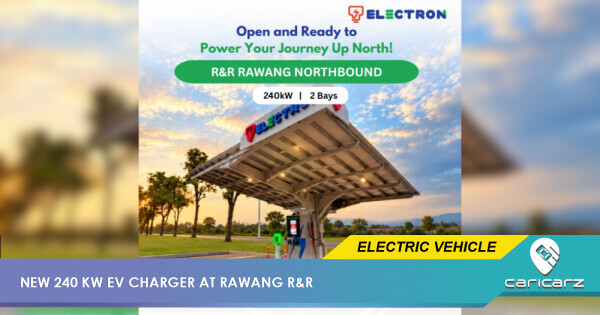
Driving Up North In An EV? There's A New 240 kW Charger At Rawang R&R
TNB Electron's new 240 kW DC EV charger at R&R Rawang Northbound is now live, with free charging available until 29 Sept 2026.
28-09-2026
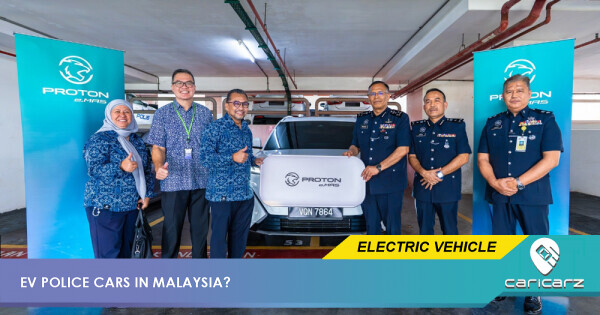
Could An EV Really Work As A Malaysian Police Car? PDRM Is Finding Out
PDRM is testing the Proton e.MAS 5, e.MAS 7 EV and e.MAS 7 PHEV to see whether electrified vehicles could work for Malaysian police duties.
18-09-2026
Malaysia's Electricity Protection Is Now 800 kWh - How Much Power Does An EV Use Per 100 KM?
Malaysia's electricity protection threshold is now 800 kWh. Here's how much electricity popular EVs use per 100 km and what the extra 200 kWh means.
18-09-2026
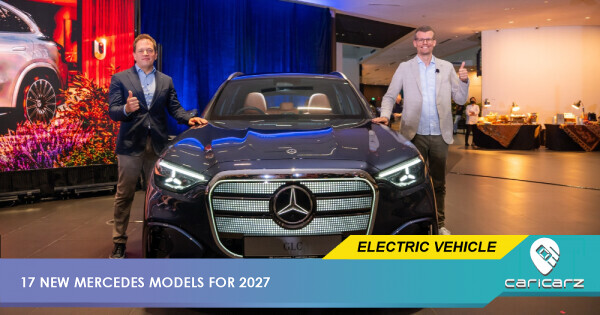
17 New Mercedes Models Are Coming To Malaysia In 2027 - Here's What We Know
Mercedes-Benz Malaysia plans 17 new models for 2027, with most set for local assembly in Pekan. Here's what we know about its ICE and EV plans.
17-09-2026
Show More
trending_flat
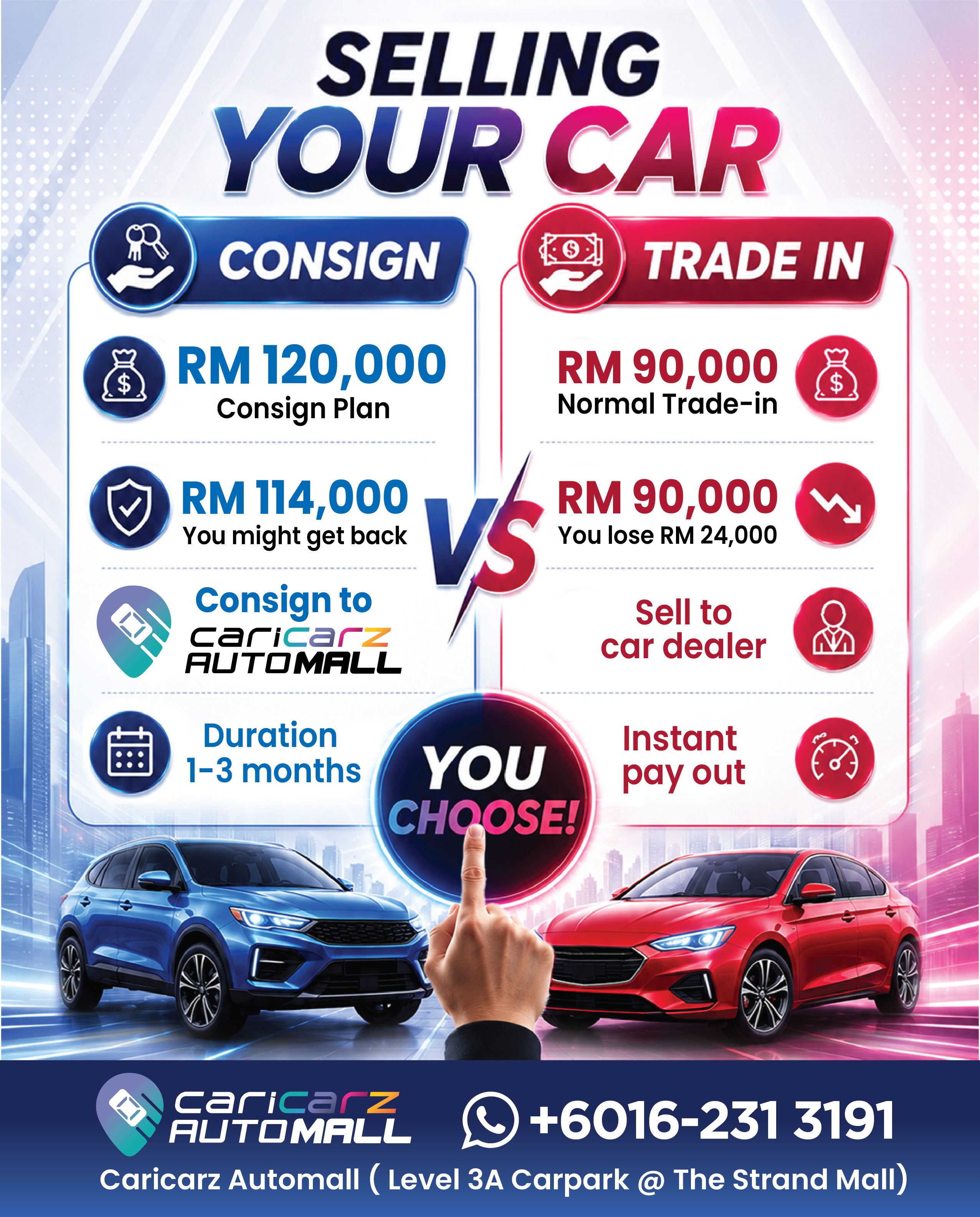
Malaysia First Used Car and EV Consignment Platform
This is the best place to sell your car at true market value. Instead of accepting low dealer trade-ins, we handle everything and connect your car directly to genuine buyers for the highest price.

Understanding CariCarzAutomall Consignment Plan

Approved 200-Check Points Inspection

7 Day Money Back Guarantee

One Year Extended Warranty

No Hidden Charge
