It Costs Up To RM300K To Protect One School Zone, And The Government Is Inviting Private Companies To Step Up


A security guard helps students cross the road in front of a school. (Source: HM)
Here is a scary statistic you might not know: a massive chunk of Malaysia's 10,000+ schools are built directly alongside high-speed federal and state highways. This means thousands of local children step off their school buses every day directly into the path of heavy, fast-moving commuter traffic.
Acknowledging that simple warning signs just aren't cutting it anymore, Transport Minister Anthony Loke announced at the Malaysian Road Safety Council (MKJR) AGM that the government is rolling out an aggressive infrastructure expansion to protect these high-risk areas.
The catch? Building a genuinely secure Safe School Zone environment requires a heavy investment of up to RM300,000 per school. Because public funds can only go so far, the ministry is trying something different. Here is the full breakdown of the upcoming road transformations and how the government plans to get private developers to fund them.
The Reality: Thousands Of Schools Sit Directly On High-Speed Roads
To understand why the upgrades are so complex, you have to look at how Malaysia is built. There are currently more than 10,000 schools nationwide, and a staggering number of them are located directly along incredibly busy federal and state transit roads.
These aren't quiet suburban streets; they are major thoroughfares where heavy commuters, trucks, and interstate traffic fly by at high speeds. Because children are stepping off busses right into these high-risk areas, the ministry noted that simple warning signs are no longer enough to cut it, meaning heavy structural interventions are completely necessary to create safe buffer zones.
What Does An RM300,000 "Safe School Zone" Actually Buy?

The high cost comes down to a major shift in urban engineering. Instead of just putting up "Slow Down" signs and hoping for the best, the ministry’s blueprint focuses on "self-enforcing infrastructure", physical road changes that force drivers to drop their speeds subconsciously.
When a school undergoes this RM200K to RM300K transformation, the environment outside the gate is completely overhauled with:
- Physical Traffic-Calming Measures: The ministry will install physical speed humps directly outside the school perimeter to mechanically force passing vehicles to slow down.
- Special Road Designs: Instead of relying entirely on standard asphalt layouts, the areas will incorporate custom road designs specifically engineered to curb speeding.
- Dedicated Road Furniture: The perimeter will be outfitted with dedicated road furniture to create a highly visible and structured environment for students.
- The Strict 30km/h Limit Zone: The entire physical layout is mathematically calibrated to strictly enforce a maximum speed limit of 30 kilometres per hour to give children a fighting chance in an emergency.
The 14-School Trial Run
This isn't just a theoretical concept on paper. The Road Safety Council has already run a highly controlled Safe School Zone Pilot Project across 14 schools nationwide, which is benefiting nearly 20,000 students and staff members from high-speed risks.

Many of Malaysia’s 10,000+ schools are located right next to busy federal and state highways. (Photo for illustration purposes only)
The ministry fully intends to expand this blueprint across the country this year. However, doing the math reveals a massive financial brick wall: multiplying RM300,000 by thousands of high-risk schools results in an astronomical budget requirement.
Anthony Loke was entirely transparent about this constraint, stating directly that because public funding is inherently limited, the government cannot fund a lightning-fast nationwide rollout entirely on its own.
Enter the Corporate Challenge: Why Private Developers Are Being Called Out
Because of the limited public budget, the Transport Ministry is officially issuing an open invitation to private companies, property developers, and corporate sponsors to step up and co-fund these school upgrades.
The logic is simple: housing developers build massive residential estates that naturally increase traffic load on adjacent federal and state roads.
By participating in an adopt-a-school safety initiative, these corporations can directly finance the RM300,000 infrastructure overhauls for the schools sitting inside or right next to their commercial townships.
Moving forward, the ministry is urging state governments, corporate players, and local municipal councils to aggressively collaborate to map out the most accident-prone coordinates so that private funding can be deployed where it is needed most.
Sources: Malay Mail | NST
Read: Phew! Anthony Loke Confirms T20s Won’t Be Cut From Fuel Subsidies... For Now
Written By
Sofea Najmi
A Bachelor of English Language and Literature graduate with an obsession for the finer details. Sofea uses her background in translation to decode the technicalities of automotive innovation. She is dedicated to delivering impactful, meticulously researched articles that provide a narrative far beyond the spec sheet. LinkedIn: https://bit.ly/3C018vv


JPJ Running Numbers
KUALA LUMPUR
VRT4934
SELANGOR
BSU3493
JOHOR
JF5210J
PULAU PINANG
PSG3210
PERAK
APM1537
PAHANG
CFH9844
KEDAH
KGJ4157
NEGERI SEMBILAN
NEM2445
KOTA KINABALU
SJU5013
KUCHING
QAB7415P
Last updated 10 Oct, 2026
Fuel Price
Petrol
RON 95
RM 3.97
+1.38
RON 97
RM 4.90
+1.75
RON 100
RM 7.20
+2.20
VPR
RM 8.23
+2.00
Diesel
EURO 5 B10
RM 5.12
+2.08
EURO 5 B7
RM 5.32
+2.08
Last updated 30 Apr, 2026
Latest News
BUDI Diesel: 400 Litres A Month, But How Many Owners Actually Need That Much?
Fewer than 7% of eligible owners exhausted their 400-litre BUDI Diesel quota in September. Here's what the figures reveal about actual fuel usage.
09-10-2026
Jetour Is Moving Upmarket, And Its Malaysian Sales Tell An Interesting Story
Chery wants to take Jetour upmarket, while the T1 and T2 accounted for 69% of its Malaysian registrations in August 2026. Here's why that matters.
09-10-2026
Chery Omoda 5 Rear Axle Detaches In JB. Is It Linked To The 2024 Issue?
A Chery Omoda 5 has been seen with its rear axle detached in Johor Bahru. Is it related to the model's 2024 axle issue? Here's what we know.
08-10-2026
40.77 Million Vehicles In Malaysia?! Hold On, There's More To That Number
Malaysia has 40.77 million registered vehicles, but only 26.6 million are active. Here's what the huge figure actually means.
07-10-2026
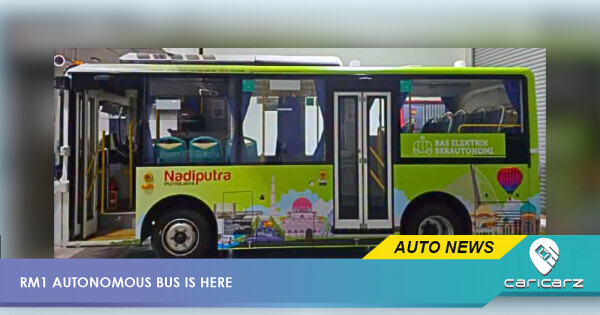
Putrajaya's RM1 Autonomous Bus Is Now Running. Here's What You Need To Know
Putrajaya's P113 autonomous EV bus starts passenger service from Oct 7 for RM1. Here's its route, schedule, payment method and what to know.
07-10-2026
Even If RM314 Million Is Settled, MyEG's JPJ Services May Not Return The Same Way
Zetrix has proposed a solution over RM314 million in outstanding government revenue, but settling it may not mean MyEG's JPJ services return as before.
06-10-2026
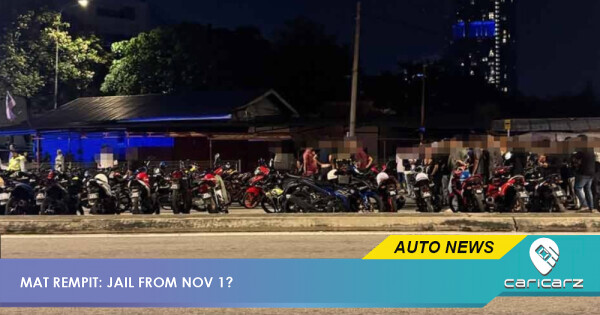
Mat Rempit Could Face Jail From Nov 1. Here's What We Know So Far
Mat Rempit could face tougher penalties, including jail, from Nov 1. Here's what's changing, what Section 42A means and what still needs to happen.
06-10-2026
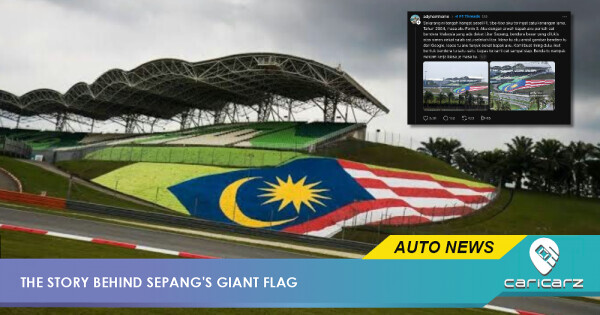
He Painted Sepang's Giant Flag With His Dad. 22 Years Later, It Means Everything
At 15, Ady says he painted Sepang's giant Malaysian flag with his father. Twenty-two years later, F1's return brought back a priceless memory.
05-10-2026
Show More
trending_flat
Malaysia First Used Car and EV Consignment Platform
This is the best place to sell your car at true market value. Instead of accepting low dealer trade-ins, we handle everything and connect your car directly to genuine buyers for the highest price.

Understanding CariCarzAutomall Consignment Plan


Approved 200-Check Points Inspection

7 Day Money Back Guarantee
One Year Extended Warranty

No Hidden Charge
