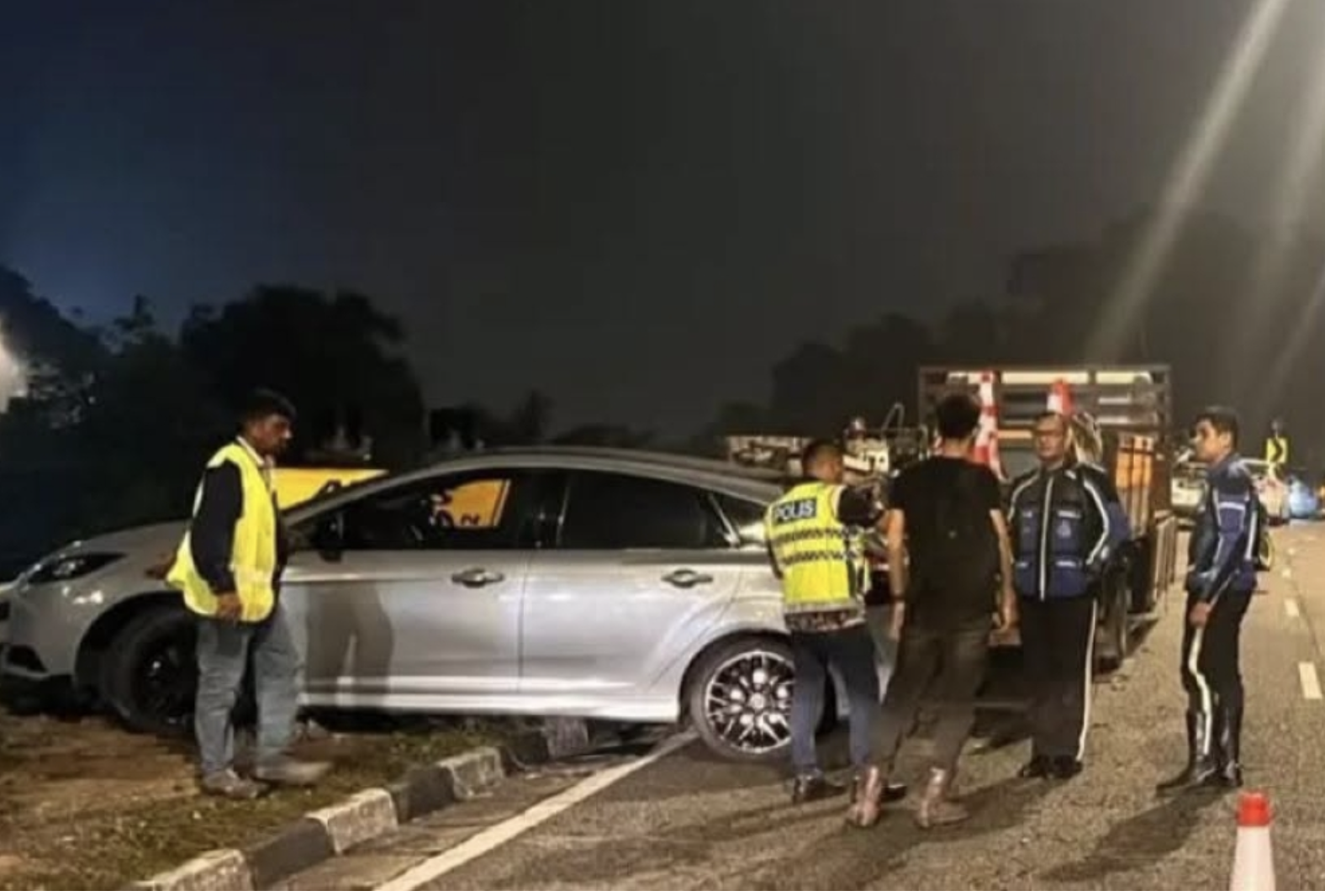
The scene of a fatal crash along Lebuhraya Sultan Iskandar, Kuala Lumpur, on 24 October 2026, which claimed the life of 29-year-old road maintenance supervisor Faris Irfan Fazli and injured a 49-year-old lorry driver. A 26-year-old flight attendant subsequently pleaded not guilty to two drunk-driving charges in connection with the incident. (Photo: PDRM)
A drunk driver may end up behind bars after causing a fatal crash. But for the victim's family, the financial consequences can continue long after the court case ends.
Malaysia now wants courts to be able to order convicted drunk or drug-impaired drivers to compensate victims or their families, on top of existing penalties.
The proposal could make compensation easier to pursue. But how would it work, and what happens if the offender cannot pay?
TL;DR: DRUNK-DRIVING COMPENSATION
COMPENSATION: Courts could order convicted offenders to pay victims or their families.
SIMPLER PROCESS: Payment could be ordered during criminal proceedings.
NOT YET LAW: Parliamentary tabling is targeted for early 2027.
As Bernama reported, victims seeking damages generally face a separate civil process, which can be costly and time-consuming. The proposed amendment to the Road Transport Act 1987 (Act 333) would allow criminal courts to order compensation as well.
WHAT COULD CHANGE FOR VICTIMS?
CURRENT ROUTE
Criminal prosecution and possible conviction
↓
Victims generally pursue a separate civil claim for damages
PROPOSED ROUTE
Criminal prosecution and possible conviction
↓
Court could also order compensation for eligible victims or families
Illustration of the proposed change. Existing criminal penalties would remain, while final eligibility and procedures are subject to legislation.
Importantly, compensation would be additional to existing criminal penalties, rather than a replacement for imprisonment or fines.
Our earlier coverage of the proposed compensation mechanism following the fatal Klang crash in March 2026.
How Would Victim Compensation Be Decided?
The government has not proposed a fixed payment for every case. Instead, courts would determine compensation according to individual circumstances.
Transport Minister Anthony Loke previously outlined several considerations that could guide the assessment.
WHAT COULD COURTS CONSIDER?
1Severity of the offence
2Injury or death
3Losses suffered by victims
4Offender's ability to pay
These are considerations outlined by the minister, not final statutory criteria.
No fixed compensation amount or final calculation method has been announced. The proposal is particularly relevant to serious cases involving death, serious injury or permanent disability.
Another unresolved question is how compensation ordered during criminal proceedings would interact with separate civil claims, including whether victims could pursue additional damages.
What If The Driver Cannot Afford To Pay?
Even if a court orders compensation, there is no guarantee that an offender will have the money to pay it.
During a Dewan Rakyat sitting on 15 October, Loke said the government was considering further measures against offenders who fail to pay. According to Bernama, the possibilities include asset seizure and additional imprisonment or other penalties.
WHAT IF COMPENSATION ISN'T PAID?
Asset seizure: One possible enforcement measure being studied.
Additional imprisonment or penalties: Also under consideration, not yet approved.
However, these measures are not yet law. The final framework must also address the difference between offenders who refuse to pay and those who genuinely lack the financial means.
When Will The New Law Take Effect?
Not just yet. The government has agreed to the proposal in principle, but the legal amendments are still being developed.
According to Loke's explanation in the Dewan Rakyat, the Transport Ministry is targeting early 2027 to table the proposed amendments, subject to legal drafting and consultations.
CURRENT STATUS: The proposed compensation requirement is not yet in force.
Even if the Bill is tabled as planned, it must still pass the necessary legislative stages before the new provisions can take effect. Until then, Malaysia's existing road traffic laws and penalties remain applicable.
What Does This Mean For Accident Victims?
For victims and their families, the proposed law could mean one less legal battle after a devastating crash. But its real value will depend on the details: who qualifies, how much courts can award, and whether offenders can actually be made to pay.
Drunk-Driving Compensation In Malaysia: Frequently Asked Questions
Can drunk-driving victims claim compensation in Malaysia now?
Victims may already seek compensation through applicable civil legal processes. The proposed amendment aims to give criminal courts a specific mechanism to order compensation against convicted offenders, potentially reducing the need for separate proceedings. Eligibility and procedures would depend on the final law.
Will every convicted drunk driver automatically have to pay compensation?
No automatic payment requirement has been established under the proposal. The government intends for courts to determine compensation based on the circumstances of eligible cases. The final scope and criteria remain subject to legislation.
What happens if an offender refuses to pay compensation?
The government is considering measures such as asset seizure and additional penalties for non-payment. However, these provisions have not been finalised or enacted, and their application remains uncertain.
When will Malaysia's new drunk-driving compensation law start?
The government is targeting early 2027 to table amendments to the Road Transport Act 1987. This is a parliamentary target, not an enforcement date. The proposed provisions would need to complete the legislative process before taking effect.
A Bachelor of English Language and Literature graduate with an obsession for the finer details. Sofea uses her background in translation to decode the technicalities of automotive innovation. She is dedicated to delivering impactful, meticulously researched articles that provide a narrative far beyond the spec sheet. LinkedIn: https://bit.ly/3C018vv
Malaysia plans to make convicted drunk drivers compensate victims. Here's how the proposed law could work, who may qualify and when it could take effect.
Over 200,000 pre-2015 commercial vehicles need speed limiter retrofits, but Malaysia has just 33 JPJ-approved suppliers. Only 17% have recorded compliance.
DENZA opens a 3,000-sqm Balakong 4S centre with servicing, body and paint facilities, plus BYD Flash Charging planned. See its location and opening hours.
Malaysia First Used Car and EV Consignment Platform
This is the best place to sell your car at true market value. Instead of accepting low dealer trade-ins, we handle everything and connect your car directly to genuine buyers for the highest price.
Understanding CariCarzAutomall Consignment Plan
Approved 200-Check Points Inspection
7 Day Money Back Guarantee
One Year Extended Warranty
No Hidden Charge
About Us
CarzAutoMedia: Stay connected to the latest car news! Get instant updates on new releases, industry trends, and automotive innovations. Your go-to source for 24/7 coverage of everything automotive.