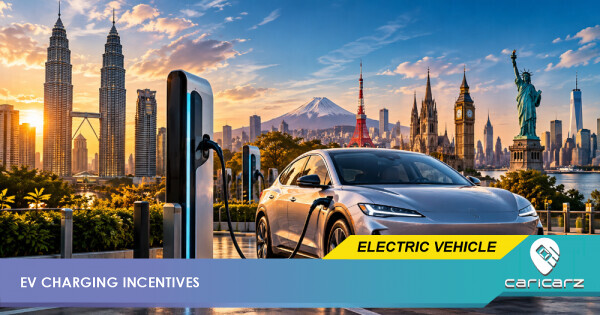
Ever wondered why some places have plenty of EV chargers, while others barely have any? It's not always because nobody wants to install them. Sometimes, the problem is money.
Setting up a charging station involves more than buying the equipment. There are installation costs, electrical upgrades and maintenance to consider. After spending all that money, operators still need enough drivers using their chargers to make the investment worthwhile.
That's why governments step in. Some help pay eligible installation costs. Others offer tax breaks or coordinate the electrical infrastructure needed to support chargers.
Malaysia already offers incentives of its own. But what do other countries do differently, and could their approaches help improve our charging network?
South Korea: Seoul Offers Up To 70% Support For EV Charger Installation, But Not For Everyone
Installing EV chargers isn't cheap, especially for smaller apartment buildings and commercial properties. To make things easier, Seoul introduced a pilot programme offering financial assistance to help cover installation costs.
The Seoul Metropolitan Government's July 2026 pilot announcement offered up to 70% of installation costs for qualifying shared DC fast chargers at small apartment developments and commercial buildings. Eligible slower-charger installations could receive up to 50%, with charger-specific monetary caps.
The support was aimed at building-management bodies and site owners installing chargers themselves. It was a Seoul pilot for eligible properties, not a nationwide offer to every charging operator.
The Malaysian lesson is where the help was directed: properties with gaps in residential and neighbourhood charging. A targeted scheme could be worth examining here, although this pilot alone does not show how well that approach would work in Malaysia.
Japan: Government Subsidies Help Cover EV Charger Equipment And Installation Costs
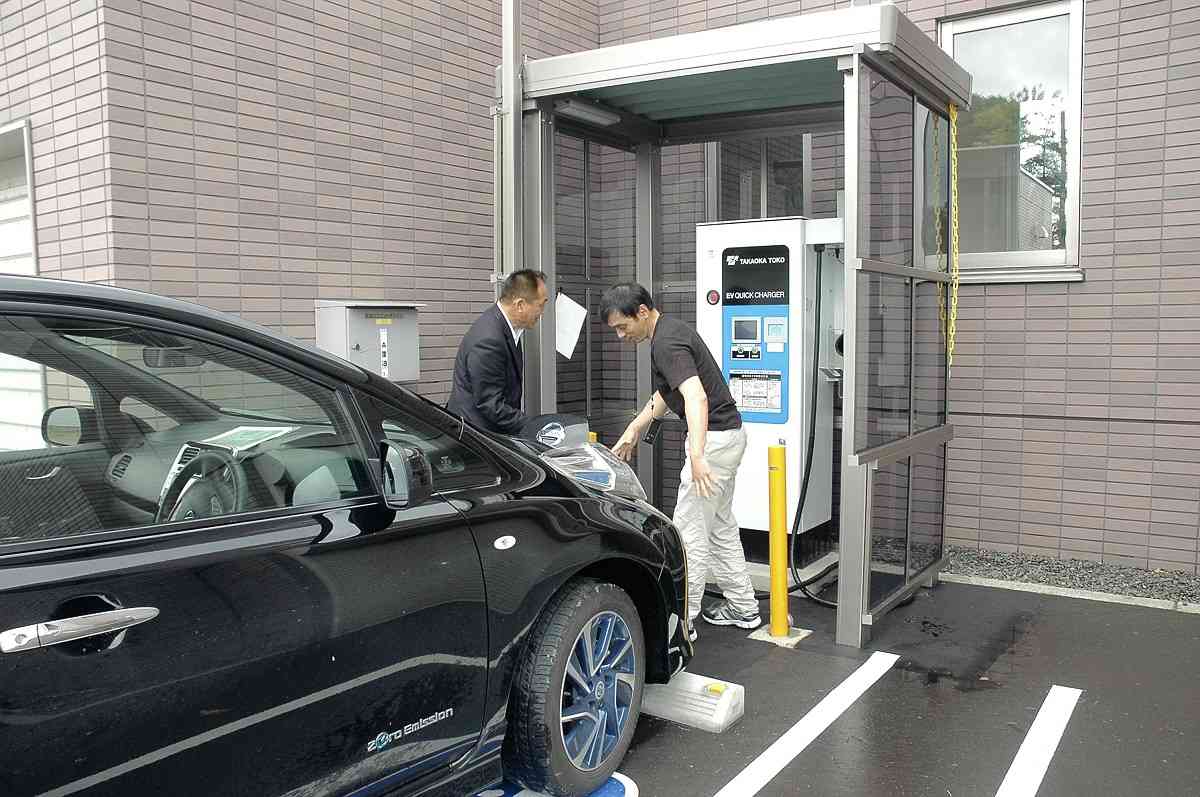
A charger is only part of the shopping list. Cabling and installation work also cost money, and Japan's approach recognises both parts of the bill.
Japan's FY2025 supplementary-budget charging subsidy guidance covers several types of sites, including motorway service areas, places with limited charging coverage, commercial premises, accommodation facilities, apartments and workplaces. It sets separate maximum amounts for the charger equipment and the installation work.
In practical terms, a grant helps pay eligible project costs directly. How much a project can receive depends on the type of site, the equipment and the scheme's rules.
That is why Japan cannot be reduced to one headline subsidy percentage. An apartment installation and a motorway charging site may qualify for different amounts. Applicants also need to check which funding round is open and which rules apply.
Thailand: Approved EV Charging Operators Can Enjoy Up To 5 Years Of Corporate Tax Exemption
Thailand's BOI Investment Promotion Guide 2026, dated July 2026, continues to list EV charging stations as an eligible promoted activity.
Projects with at least 40 chargers, of which at least 25% are DC fast-charging units, fall under category A3. Other qualifying charging projects fall under A4.
The basic corporate income tax exemption periods are five years for A3 and three years for A4. BOI approval, investment-based exemption caps and operating conditions apply.
The benefit comes through tax relief on profits from the approved project. It does not reimburse the charger purchase. Like Malaysia's allowance, it aims to encourage investment, but the way a business receives the benefit is different.
Singapore: Government Covers Up To 50% Of Eligible Condo EV Charger Costs, With A Cap
Imagine living in a condominium where several residents want EV chargers, but installing them would cost the management a small fortune. Singapore has a way to ease that burden: its EV Common Charger Grant helps cover 50% of specified upfront cost components for shared chargers at non-landed private residences, including condominiums.
Of course, the support isn't unlimited. Grant caps and eligibility conditions apply, and applicants should check with the Land Transport Authority (LTA) whether funding remains available.
But what happens when a carpark has parking bays for chargers and too little electrical capacity to power them? Singapore also coordinates electrical infrastructure upgrades at public housing carparks. An April 2026 parliamentary reply explains that electrical-upgrade contracts are separate from charger-installation contracts. One contract awarded in May 2025 covered 300 HDB multi-storey carparks.
That is the lesson for Malaysia: more chargers need an electricity supply that can support them. Paying for the equipment is only half the battle.
European Union: Nearly €422 Million In Funding Supports Projects Including 2,500 Light-Duty EV Charging Points
The European Union also helps fund public EV charging infrastructure, including chargers for passenger cars.
In February 2025, it announced nearly €422 million in funding for 39 alternative-fuels infrastructure projects, including plans for approximately 2,500 charging points for light-duty vehicles, a category that includes passenger cars.
Unlike a standard tax incentive, the funding is awarded to selected projects rather than automatically offered to every charging operator.
For Malaysia, the takeaway is simple: Targeted government funding could help expand EV charging coverage in locations where private investment alone may not be enough.
Provides funding for selected EV charging infrastructure projects.
The €422 million covered various alternative-fuels projects, not just passenger-car charging. The approximately 2,500 light-duty charging points were planned under selected projects, not necessarily already installed.
Source: European Commission / CINEA, February 2025
United States: Government Could Cover 80% Of EV Charging Costs, But There's A Catch
Imagine setting up an EV charging station and having the government cover up to 80% of the eligible project costs.
Sounds like a pretty good deal, right? That's the idea behind America's National Electric Vehicle Infrastructure (NEVI) programme, which provides for an 80% federal contribution towards eligible EV charging projects.
But there's an important catch. The money isn't automatically available to every charging operator. Funding is distributed through individual states, with projects subject to specific requirements and approved plans.
And there's another complication. In March 2026, the US government repurposed US$503.756 million in unobligated NEVI funding, reducing the amount available under the programme.
Separately, a federal tax credit for EV charging equipment has also passed its deadline. According to the US Internal Revenue Service (IRS), it no longer applies to equipment placed in service after 30 June 2026.
So, while the 80% contribution sounds generous, whether an operator can actually secure funding is another matter entirely.
The NEVI programme provides for an 80% federal share of eligible EV charging project costs.
Funding depends on individual state programmes and eligibility requirements. Some NEVI funding has been repurposed, while the separate federal charger tax credit has passed its eligibility deadline.
Malaysia Already Offers EV Charging Tax Incentives
Malaysia already has a way to make qualifying charging investments more attractive. Under MIDA's green technology incentive framework, EV charging stations fall under Tier 2, with an investment tax allowance of 100% of eligible capital expenditure incurred over five years, starting from the first qualifying expenditure. The allowance can be offset against 100% of statutory income.
That can help the business case, but operators still need financing to build the site. The benefit depends on eligibility and the company's ability to use the allowance.
-full.jpg)
Timing matters too. Companies must apply before incurring qualifying capital expenditure. MIDA's application-period announcement sets 31 December 2026 as the deadline for GITA Project applications for business purposes.
For background on the businesses building the local network, see Carz's March 2026 overview of Malaysia's leading CPOs.
What Could Actually Help Malaysia?
A busy commercial site, a condominium and a quieter intercity stop do not face exactly the same problem. That is why the biggest subsidy percentage is not necessarily the most useful.
Residential charging is already happening locally. The next question is what could help more suitable sites get chargers, especially when cost, demand or electricity supply gets in the way.
Ultimately, EV Drivers Want Chargers That Work
For operators, incentives can influence whether a project makes financial sense. For drivers, the payoff should be much simpler.
They want charging that is easy to find, reasonably priced and reliable.
Whether it was built with a tax allowance or a grant matters less when you arrive with a low battery. What matters is whether the charger is there, accessible and working.