The Real Problem: When Those Who Don’t Understand EVs Try to Warn the Public


Recently, multiple media outlets and articles have claimed that:
“Three major concerns are weighing on EV demand.”
At first glance, it sounds logical. But in reality, this is not a demand problem, it is a misunderstanding problem.
The So-Called “Three Major Concerns”
Most reports highlight:
- Weak resale value
- Battery lifespan and replacement concerns
- Incomplete after-sales support
👉 Simple narrative.
👉 Easy to believe.
👉 But increasingly outdated and misleading.
In 2026, using these as a blanket argument against EVs is outdated. In many cases, the market is not rejecting EVs because the technology is weak. It is repricing EVs because battery costs are falling, competition is intensifying, and some legacy brands launched early models at prices that were too high to begin with.
1. The EQS example does not prove EVs are fundamentally bad assets
Using Mercedes-Benz EQS as proof of poor EV resale value is a gross oversimplification. This wasn't a technological failure; it was a market rejection of "brand ambition."
Launched at RM648,888 as the "future S-Class," the EQS failed to find its footing as cheaper, better-equipped Chinese EVs undercut its value proposition. As inventory piled up, Mercedes was forced to reprice aggressively to move metal. By 2025, incentives of up to RM220,000 saw transaction prices drop to RM298,888.
When a new car price is slashed by nearly 50%, used values will naturally crash. This was an inventory-clearing reset, not a signal of "EV battery fear." Notably, other Mercedes-Benz EQ models did not experience this drastic drop, proving the EQS was a specific case of a legacy brand being forced to trade its ambitious pricing for real-world market demand.
2. EV depreciation is real, but the causes are often misunderstood
Yes, many EVs have depreciated quickly in some markets. But that does not automatically mean demand is collapsing because people fear battery failure. The market has been affected by three structural shifts: rapid battery cost declines, faster model improvement cycles, and severe price competition led by Chinese manufacturers and Tesla-style repricing.

The International Energy Agency (IEA) says falling battery prices and stronger competition drove a drop in EV manufacturing costs in 2024, and battery pack prices fell by more than 25% year-on-year globally. BloombergNEF reported average lithium-ion battery prices falling again in 2025 to about $108/kWh. When the cost of making a new EV falls quickly, older EVs must also reprice lower.
So, the correct interpretation is not “used EVs are worthless because batteries die.” The better interpretation is that EVs are on a fast-moving technology and pricing curve; older models lose value faster when new models become much cheaper and better. That is painful for first owners, but it is actually good news for second-hand buyers because it makes EV ownership more accessible.
3. The old “battery is 40% of the whole car” line is increasingly outdated
The claim that the battery still makes up around 40% of an EV’s total cost is too broad. It may still describe some expensive, long-range premium EVs, but it is no longer a safe rule for the wider market. The U.S. Department of Energy’s 2025 methodology puts light-duty EV battery costs around $128–133/kWh, down from $150/kWh in earlier analyses.
IEA data also highlights that in 2024, battery pack prices for BEVs fell sharply and that LFP batteries, now nearly half of the global market, are helping lower prices further. Some market analyses now place battery cost share much lower than the old 40% talking point for mainstream vehicles. This matters because once battery costs fall, the upfront price becomes more competitive and the logic that an expensive battery makes the whole car worthless becomes weaker.
4. Battery prices have dropped massively, changing the whole equation
This is where the anti-EV narrative is most outdated. U.S. Department of Energy historical data showed EV battery costs around $753/kWh in 2010, while recent industry data puts average prices near $115/kWh in 2024 and around $108/kWh in 2025. Goldman Sachs projected average battery prices could approach $80/kWh by late 2026. Whether one uses DOE, IEA, or BNEF-linked estimates, the direction is unmistakable: battery costs have collapsed over the last 15 years.

That decline is a main reason EV prices are falling. When observers see weaker resale values and conclude demand is low because "batteries are scary," they miss the economic reality: new EVs are getting cheaper to build, which naturally compresses used prices. This is a signal of industrial maturation, not technological failure.
5. Real-world battery life is better than old assumptions
The latest evidence cuts strongly against the old narrative of battery-life fear. A Stanford-SLAC study published in Nature Energy found that batteries operating under real-world dynamic driving patterns can last up to 38% longer than standard lab-style testing suggested.
Large-scale field data points in the same direction. Geotab’s 2026 update, based on data from 10,000 cars, reported average battery degradation of about 1.8% per year under moderate conditions and estimated many EV batteries can last 15 to 20 years. Recurrent’s 2025 research found that, outside of major recalls, battery replacements remain rare; for EVs from model year 2022 onward, the replacement rate was only about 0.3%.
-full_normal.jpg)
Even broader longevity research has improved the picture. A 2025 Nature Energy paper on vehicle longevity in Great Britain found that modern BEVs have an average lifespan of about 18.4 years, close to petrol cars at 18.7 years and ahead of diesel at 16.8 years.
6. After-sales support is a fair concern, but it is improving
The concern that after-sales support is still developing is partly true, especially in emerging markets. But the direction of travel matters. Malaysia’s charging network grew from 3,354 public chargers in October 2024 to 5,624 by the end of 2025. At the same time, more brands are entering Malaysia, local assembly is expanding, and the ecosystem for parts, service, and charging is getting deeper.
It is wrong to frame after-sales support as a permanent structural weakness. It is more accurate to say the ecosystem is in a build-out phase, which is normal for a growing technology.
7. If demand were weak, sales data would look very different
The claim that these concerns will keep demand low is hard to square with actual growth. Globally, electric car sales exceeded 17 million in 2024, representing more than 20% of all cars sold worldwide. In Malaysia, EV registrations reached 44,813 units in 2025, more than double the 2024 figure according to JPJ data.

Image credit to soyacincau
Lower resale value in a fast-expanding market does not automatically mean low demand. Sometimes it means exactly the opposite: more supply, more competition, and broader affordability.
8. Are EVs now a better option? In many cases, yes
The total value proposition has improved. The IEA says electric cars often already have a lower total cost of ownership than ICE cars over their lifetime because of lower fuel and maintenance costs. The U.S. Department of Energy has also found scheduled maintenance costs for BEVs are materially lower than for conventional vehicles.
The old one-line argument, “used EVs drop, batteries die, support is weak, therefore demand will stay low”, no longer holds up as a serious, evidence-based conclusion.
Conclusion
Is the idea that “three major concerns weigh on demand” truth or myth? It is an outdated half-truth. Resale pressure is real, but often driven by falling new-car prices rather than simple battery fear. Battery-cost assumptions used in older arguments are no longer current, and real-world durability is proving stronger than expected.
The EV market is not failing; it is maturing. The biggest winners are often not the earliest owners of overpriced models, but the next wave of buyers who enter at lower prices with better infrastructure and a clearer understanding of real-world ownership.


JPJ Running Numbers
KUALA LUMPUR
VRT5435
SELANGOR
BSU3563
JOHOR
JF5471J
PULAU PINANG
PSG3466
PERAK
APM1687
PAHANG
CFJ281
KEDAH
KGJ4297
NEGERI SEMBILAN
NEM2486
KOTA KINABALU
SJU5044
KUCHING
QAB7420P
Last updated 11 Oct, 2026
Fuel Price
Petrol
RON 95
RM 3.97
+1.38
RON 97
RM 4.90
+1.75
RON 100
RM 7.20
+2.20
VPR
RM 8.23
+2.00
Diesel
EURO 5 B10
RM 5.12
+2.08
EURO 5 B7
RM 5.32
+2.08
Last updated 30 Apr, 2026
Latest News
EV Charging Incentives: Malaysia vs Other Countries
Malaysia offers EV charging tax incentives, but how does it compare globally? Explore EV charger subsidies, grants and tax breaks in six other markets.
08-10-2026
Proton Sold 40,000 e.MAS Cars. But That's Not Even The Most Interesting Number
Proton e.MAS has delivered 40,000 vehicles, but the e.MAS 5's place among Malaysia's best-selling cars tells an even bigger EV story.
30-09-2026

Kuching Gets Zeekr's First East Malaysia Store, With More Coming Next Year
Zeekr opens its first East Malaysia retail location at The Spring Kuching, with permanent sales and service centres targeted for Q1 2027.
29-09-2026
Buying A Hybrid Or EV? MAA Proposes Up To RM10,000 Tax Rebate
MAA proposes a RM7,000-RM10,000 income tax rebate for hybrid and EV buyers under Budget 2027, plus incentives for home charging and old-car scrapping.
28-09-2026
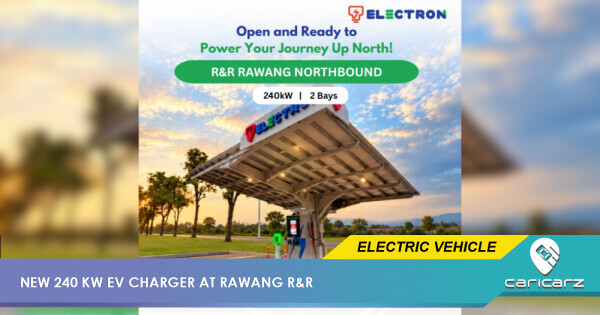
Driving Up North In An EV? There's A New 240 kW Charger At Rawang R&R
TNB Electron's new 240 kW DC EV charger at R&R Rawang Northbound is now live, with free charging available until 29 Sept 2026.
28-09-2026
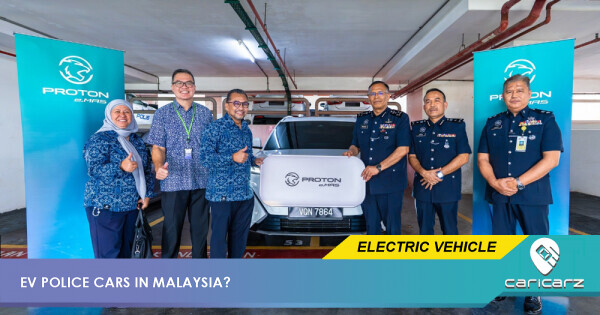
Could An EV Really Work As A Malaysian Police Car? PDRM Is Finding Out
PDRM is testing the Proton e.MAS 5, e.MAS 7 EV and e.MAS 7 PHEV to see whether electrified vehicles could work for Malaysian police duties.
18-09-2026
Malaysia's Electricity Protection Is Now 800 kWh - How Much Power Does An EV Use Per 100 KM?
Malaysia's electricity protection threshold is now 800 kWh. Here's how much electricity popular EVs use per 100 km and what the extra 200 kWh means.
18-09-2026

17 New Mercedes Models Are Coming To Malaysia In 2027 - Here's What We Know
Mercedes-Benz Malaysia plans 17 new models for 2027, with most set for local assembly in Pekan. Here's what we know about its ICE and EV plans.
17-09-2026
Show More
trending_flat
Malaysia First Used Car and EV Consignment Platform
This is the best place to sell your car at true market value. Instead of accepting low dealer trade-ins, we handle everything and connect your car directly to genuine buyers for the highest price.

Understanding CariCarzAutomall Consignment Plan


Approved 200-Check Points Inspection

7 Day Money Back Guarantee

One Year Extended Warranty

No Hidden Charge
