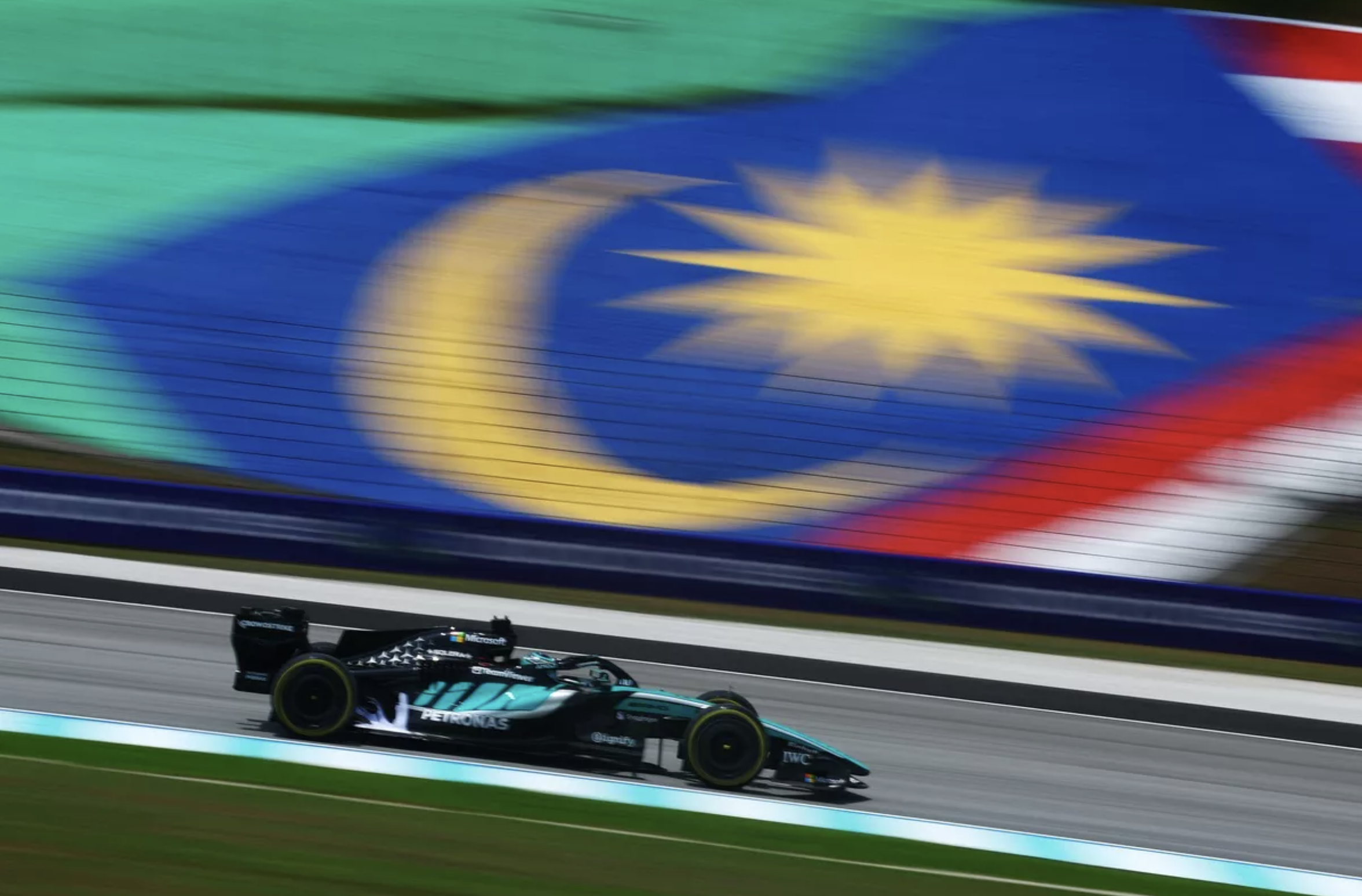
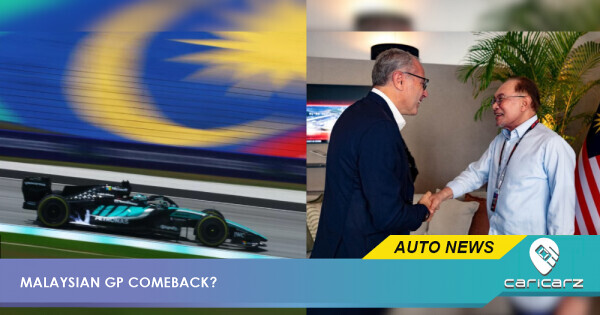
Nearly RM950 million in estimated economic impact, huge crowds and Formula 1 roaring around Sepang once again.
On paper, Malaysia's recent F1 comeback sounds like a major success.
So why isn't the government rushing to bring back the Malaysian Grand Prix every year?
The answer isn't simply about whether Malaysians still love F1.
It's about who pays, how much it costs and whether the economic benefits justify a long-term commitment.
And when that commitment could potentially reach RM1.5 billion over five years, the government's caution becomes easier to understand.
⚡ TL;DR: WHY MALAYSIA IS STILL WEIGHING F1
RM950 million: Estimated economic impact of the October 2026 Bahrain GP at Sepang.
The advantage: Bahrain covered the F1 hosting-rights fees for the recent race.
The commitment: An annual Malaysian GP could cost at least RM300 million, potentially amounting to RM1.5 billion over five years.
What's next: A government assessment is expected to reach Cabinet in November 2026.
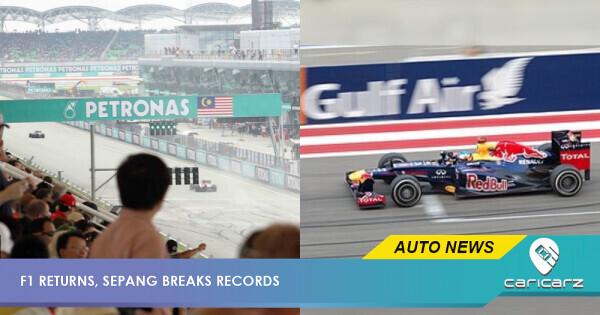
After nine years without Formula 1 racing at Sepang, the circuit welcomed the sport back from
2 to 4 October 2026, hosting the Gulf Air Bahrain Grand Prix under a special arrangement.
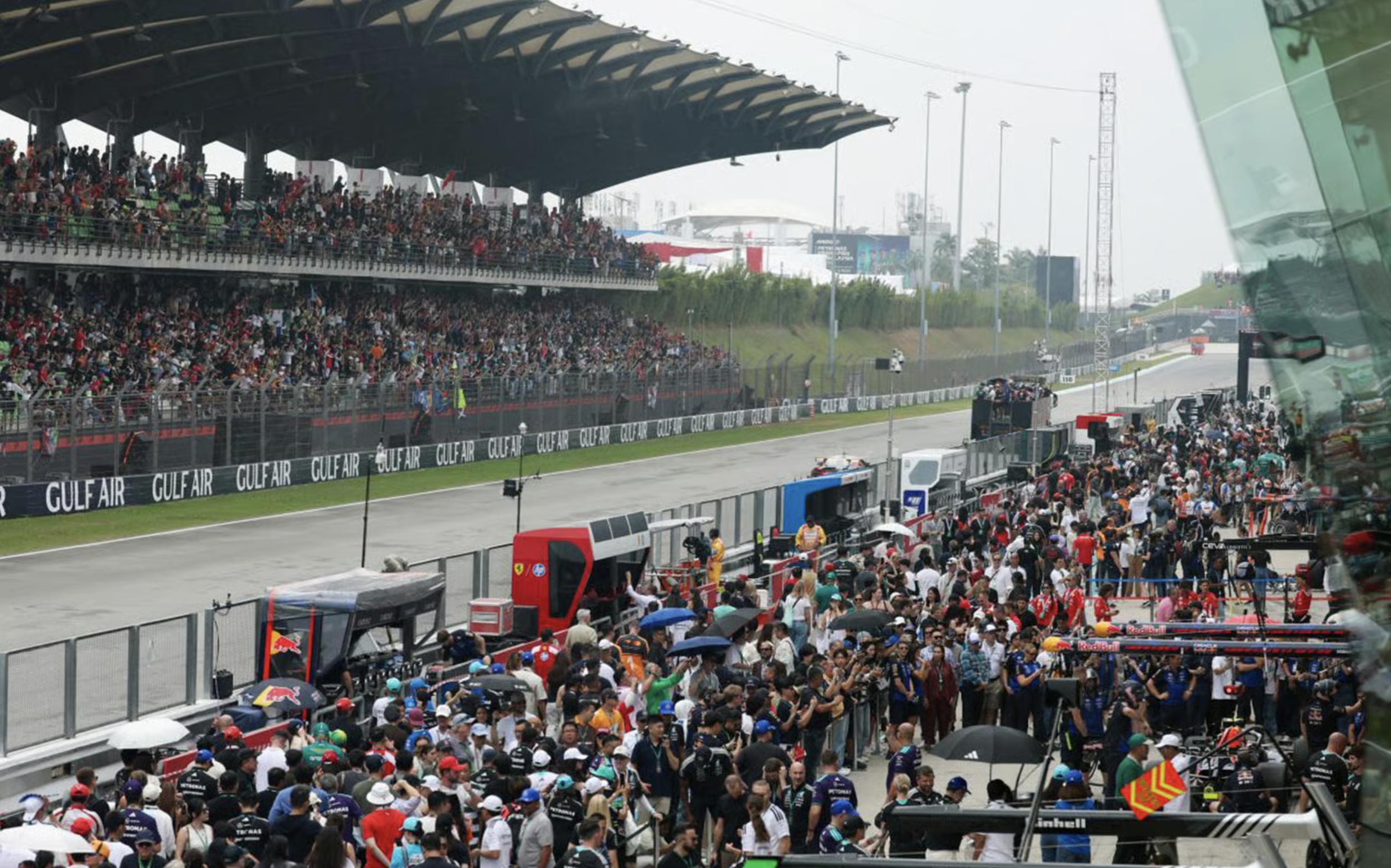
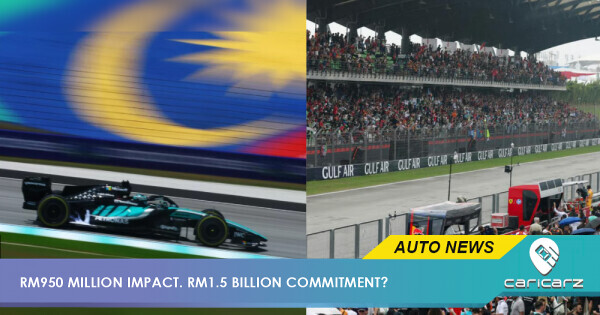
The event attracted approximately 261,000 attendances across three days, including 103,000 on race day.
The event recorded more than 97,000 ticket sales, attracted over 50,000 international tourists and involved approximately 5,000 foreign personnel. (Photo: Bernama)
The ministry also reported more than 97,000 tickets sold, over 50,000 international tourists and approximately 5,000 foreign personnel associated with the event.
For Sepang International Circuit (SIC), the response was especially encouraging.
As
Carz previously reported,
ticket sales had already reached record levels before the race weekend.
But the benefits weren't limited to the circuit.
BEYOND THE RACETRACK
RM345 MILLION+
Estimated economic spillover effects benefiting local micro, small and medium enterprises (MSMEs), according to Entrepreneur Development and Cooperatives Minister Steven Sim.
Malaysia still had circuit preparation and local operational responsibilities, with SIC estimating around
RM40 million in preparation costs to be shared with Bahrain.
Separately, Prime Minister Datuk Seri Anwar Ibrahim had earlier estimated Malaysia's circuit preparation expenditure at approximately
RM10 million to RM16 million.
These were earlier estimates describing different expenditure scopes, not confirmed final accounts of Malaysia's total spending.
The key point is that Malaysia did not have to bear the enormous hosting-rights bill for this particular race.
That makes the October event financially different from what Malaysia would face if it wanted its own permanent Formula 1 calendar slot.
Securing an annual Malaysian Grand Prix would involve a considerably larger financial commitment.
SIC CEO Azhan Shafriman previously estimated that hosting F1 permanently could cost Malaysia
at least RM300 million annually, including hosting-rights fees and local preparations.
But here's where the numbers become even more significant.
According to
The Edge Malaysia,
F1 host countries typically enter three- or five-year hosting agreements.
Based on SIC's RM300 million annual estimate, that could translate into approximately
RM900 million over three years or RM1.5 billion over five years.
Those are illustrative calculations rather than confirmed contract values.
Actual costs and terms would depend on any future negotiations.
Still, it changes the conversation.
Malaysia wouldn't necessarily be deciding whether one race weekend is worth RM300 million.
It could be considering a financial commitment stretching across several years.
💰 FOUR NUMBERS BEHIND MALAYSIA'S F1 DECISION
RM950 MILLION
Estimated Economic Impact
Economic activity associated with the October 2026 Bahrain GP at Sepang.
Not government revenue or event profit.
RM10-16 MILLION
Earlier Circuit Preparation Estimate
The Prime Minister's earlier estimate for Malaysia's circuit preparation works.
Not a verified final total for the event.
RM300 MILLION+
Estimated Annual Hosting Cost
SIC's previous estimate for securing a permanent F1 calendar slot,
including hosting rights and local preparations.
RM1.5 BILLION
Illustrative Five-Year Commitment
The calculated total at RM300 million annually over five years.
Not a confirmed Malaysian F1 contract.
Important: These figures describe different financial measures.
The multi-year total assumes unchanged annual costs and is not a negotiated contract value.
Economic impact cannot be directly subtracted from hosting expenditure to calculate profit.
This is perhaps the most important distinction in the entire discussion.
Economic impact isn't the same as event profit, ticket revenue or money collected by the government.
The nearly RM950 million figure represents estimated economic activity associated with the race.
That can include visitor spending on accommodation, restaurants, transport, shopping and other services.
Some of that activity benefits Malaysian businesses and workers.
But it doesn't mean the government earned RM950 million, or that the event organiser made that amount in profit.
💡 ECONOMIC IMPACT DOES NOT MEAN PROFIT
Economic impact: Estimated activity generated across the wider economy.
Event revenue: Income received by relevant organisers and commercial parties,
such as ticketing and sponsorship revenue.
Net financial return: What remains after relevant costs are accounted for.
This cannot be determined from the RM950 million estimate alone.
For the same reason, subtracting the estimated RM300 million annual hosting cost from RM950 million wouldn't tell us how much Malaysia could earn.
The complete economic-impact methodology, verified expenditure figures and relevant revenue breakdowns would be needed for a more meaningful assessment.
The October race demonstrated substantial economic activity. What remains uncertain is whether comparable benefits could be sustained under a conventional annual Malaysian GP arrangement.
Interestingly, an annual Malaysian Grand Prix might not be the only option.
Youth and Sports Minister Dr Mohammed Taufiq Johari has acknowledged an early-stage proposal for Malaysia to host Formula 1 periodically through a rotating arrangement with another country.
A rotating arrangement could offer a different approach to the financial commitment.
However, its feasibility, costs and potential commercial terms remain unconfirmed.
There's also another challenge:
securing a place on Formula 1's crowded calendar.
Even if Malaysia decides to pursue a comeback, it would still need a suitable commercial agreement and a calendar slot.
As
Carz previously reported,
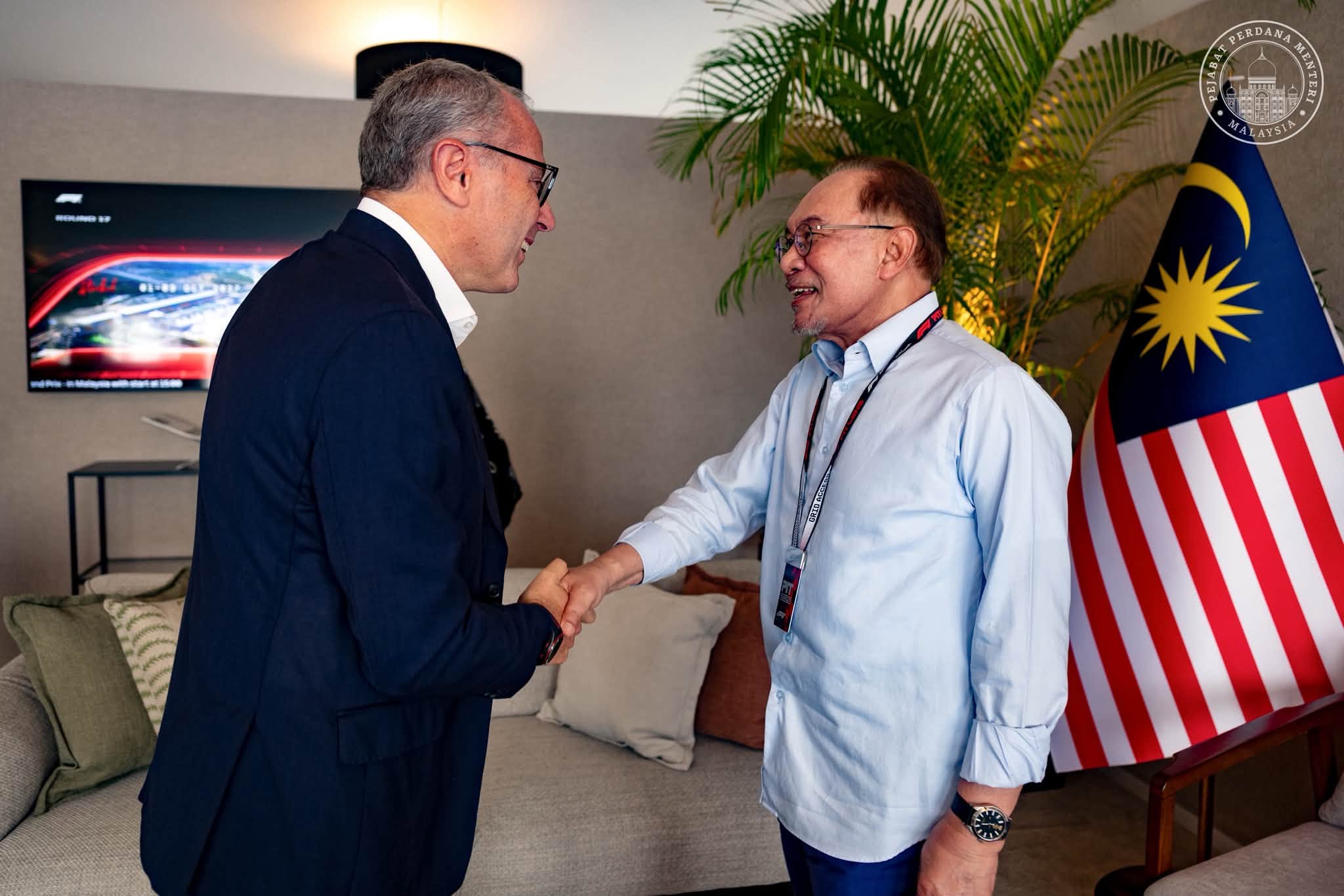
Prime Minister Anwar Ibrahim has already discussed the possibility of restoring the Malaysian GP with Formula 1 President and CEO Stefano Domenicali.
The government is assessing whether the economic benefits of hosting Formula 1 regularly would justify the financial commitment.
A committee's findings are expected to reach Cabinet in
November 2026, although no final decision date has been confirmed.
The recent Bahrain GP has shown that Sepang can still attract major crowds and generate substantial economic activity.
But the next challenge is different:
finding a hosting arrangement that makes financial sense over the long term.
F1 Malaysia: Frequently Asked Questions
Wondering whether the Malaysian Grand Prix is returning?
Here are the answers to common questions about F1 at Sepang.
Is Formula 1 returning to Malaysia every year?
Not yet. Malaysia is assessing the financial feasibility of hosting F1 regularly.
No new permanent Malaysian Grand Prix hosting agreement has been confirmed.
Did Malaysia make RM950 million in profit from F1?
No such profit has been established.
The nearly RM950 million figure refers to estimated economic impact,
which measures wider economic activity rather than government revenue or event profit.
Could hosting the Malaysian GP cost RM1.5 billion?
Potentially, based on an illustrative five-year calculation.
SIC previously estimated annual hosting costs of at least RM300 million.
At that rate, five years would total RM1.5 billion.
However, no such Malaysian hosting contract has been confirmed,
and actual costs would depend on future negotiations.
Why did Bahrain cover the hosting-rights fees?
The October 2026 event remained officially the Bahrain Grand Prix,
with Sepang serving as the host venue under a special arrangement.
Bahrain covered the F1 hosting-rights fees, while local preparation
responsibilities were shared.
When will Malaysia decide whether to bring back the Malaysian GP?
A government committee's assessment is expected to reach Cabinet
in November 2026. A final decision date has not been confirmed.
After all, bringing Formula 1 back for one spectacular weekend is one thing.
Making the numbers work year after year is an entirely different race.
A Bachelor of English Language and Literature graduate with an obsession for the finer details. Sofea uses her background in translation to decode the technicalities of automotive innovation. She is dedicated to delivering impactful, meticulously researched articles that provide a narrative far beyond the spec sheet. LinkedIn: https://bit.ly/3C018vv
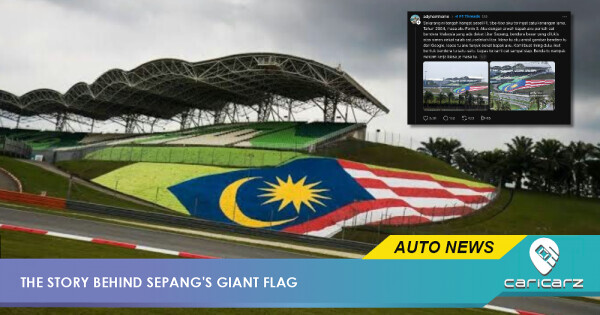
F1 has returned to Sepang after nine years, but a permanent Malaysian GP could cost at least RM300 million a year. Would the economic return justify it?
Malaysia First Used Car and EV Consignment Platform
This is the best place to sell your car at true market value. Instead of accepting low dealer trade-ins, we handle everything and connect your car directly to genuine buyers for the highest price.
Understanding CariCarzAutomall Consignment Plan
Approved 200-Check Points Inspection
7 Day Money Back Guarantee
One Year Extended Warranty
No Hidden Charge
About Us
CarzAutoMedia: Stay connected to the latest car news! Get instant updates on new releases, industry trends, and automotive innovations. Your go-to source for 24/7 coverage of everything automotive.